
Can you really beat the house edge in a casino?

Understanding the House Edge
The house edge is a fundamental concept that every casino enthusiast should comprehend to evaluate their chances of winning. It represents the statistical advantage that a casino possesses over players across various games, including those found in online casino platforms. For instance, in the game of roulette, the house edge is typically higher in the American version due to the presence of both a single zero and a double zero, while the European version, which has only one zero, offers better odds for players. This built-in advantage guarantees that, over time, the casino will consistently profit from its offerings. By familiarizing themselves with the house edge, players can make informed decisions about which games to play and how to allocate their bets strategically.
Many players may wonder if it is possible to overcome this mathematical advantage. The truth is that consistently beating the house edge is an arduous task. While some strategies can improve a player’s chances of winning, they do not eradicate the fundamental edge that the casino holds. Players might experience short-term wins, but the reality is that the likelihood of losses increases significantly in the long run due to the house edge. Understanding this concept allows players to enter the gaming environment with realistic expectations, rather than falling prey to the allure of easy wins.
Furthermore, the house edge can differ significantly among various games and betting strategies, making it essential for players to do their homework. For example, blackjack can bring the house edge down to as low as 0.5% when played with optimal strategy, which includes knowing when to hit, stand, or double down. Conversely, games like slot machines often have a higher house edge, making it more difficult for players to achieve favorable outcomes. By selecting games wisely and grasping their probabilities, players can enhance their chances of winning, even if they cannot completely eliminate the casino’s advantage.
Strategies to Reduce the House Edge
While completely overcoming the house edge may not be feasible, players can employ several strategies to minimize its impact on their gameplay. One of the most effective methods is mastering the basic strategies associated with specific games. For example, in blackjack, players who understand the strategic elements—like when to hit, stand, or split—can significantly lower the house edge. This informed approach empowers players to make decisions based on the cards they are dealt, ultimately enhancing their chances of success.
Another critical aspect of reducing the house edge involves effective bankroll management. Establishing a budget ahead of time and adhering to it is vital for all players. By determining in advance how much money to spend and setting time limits for play, players can maintain better control over their gaming experience. Proper bankroll management can help mitigate the losses that arise due to the house edge, allowing players the opportunity to capitalize on winning streaks without exceeding their financial limits.

Additionally, being selective about the games you choose can serve as a strategic advantage. Certain games naturally come with a lower house edge than others. For instance, poker allows players to pit their skills against one another instead of against the house, providing opportunities for savvy players to capitalize on the weaknesses of less experienced opponents. By understanding the intricacies of various games and choosing those with favorable odds, players can improve their overall returns on investment while enjoying their gaming experience.
The Role of Skill in Beating the House Edge
Skill is an essential component in certain casino games, especially those that hinge on strategic decision-making. Poker, for example, is a game where player skill can significantly influence outcomes, as participants compete against one another rather than the house. Experienced poker players can leverage tactics such as bluffing, reading their opponents, and managing their chip stacks to gain a competitive edge. This social and strategic aspect provides skilled players with the potential to surpass the house edge considerably.
In contrast, games that rely solely on chance, such as slot machines or roulette, do not afford players the same control over outcomes. In these instances, results are dictated by random number generators, leaving little room for skill-based tactics. Players must acknowledge the limitations of their abilities in these scenarios and recognize that the house edge remains a constant factor, regardless of their experience or skill level.
Moreover, even in skill-based games like blackjack, unpredictability is inherent. Elements such as card composition and variance can significantly impact results. Although a knowledgeable player can reduce the house edge through skillful play, they still face an inherent element of chance with each hand dealt. Hence, while skill can provide an advantage, it does not guarantee consistent victories, making it vital for players to maintain a balanced perspective that encompasses both skill and chance.
The Psychological Aspects of Gambling
The psychological dimensions of gambling play a significant role in influencing player behavior and decision-making processes. Many gamblers find themselves ensnared in cognitive biases, such as the gambler’s fallacy, where they mistakenly believe that past events will influence future outcomes. For example, a player may observe a particular number failing to appear on a roulette wheel and irrationally conclude that it is “due” to hit. Such fallacies can lead to poor betting decisions that deviate from the mathematical principles governing the game.
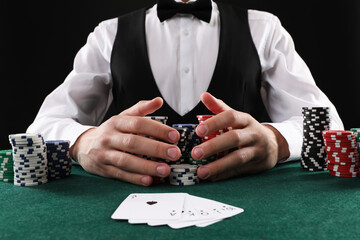
Emotions also heavily influence gambling decisions. The exhilaration of winning can cause players to chase their losses, leading them to increase their bets in an attempt to recover lost funds. This often results in even greater losses, further reinforcing the impact of the house edge. By understanding the psychological factors at play in gambling, players can better manage their behavior and make more rational decisions that align with their gaming strategies.
Ultimately, cultivating a mindset focused on enjoyment rather than an exclusive pursuit of profit is crucial for a healthy gambling experience. By setting time limits and playing responsibly, gamblers can preserve a positive relationship with gaming. Prioritizing fun and entertainment over the drive to beat the house edge can lead to a more fulfilling experience within the often unpredictable world of casinos.
Conclusion and Final Thoughts
Beating the house edge in a casino is a complex undertaking that requires a deep understanding of mathematical principles, effective strategies, and an awareness of psychological factors. While players can employ various techniques to mitigate the house edge, such as mastering game strategies and practicing sound bankroll management, the inherent advantage of the casino remains. Recognizing these realities enables players to approach their gaming experiences with a balanced and responsible mindset.
As individuals navigate the casino landscape, it is imperative to remember that gambling should primarily be regarded as a form of entertainment rather than a surefire way to generate income. By setting realistic expectations and acknowledging the limitations imposed by the house edge, players can enhance their enjoyment and potentially experience some level of success. Those who embrace the experience holistically are likely to find greater satisfaction in their casino pursuits.
For more in-depth analysis, strategies, and resources related to gaming, we invite you to explore our website. We offer valuable insights aimed at assisting players in navigating the intricate world of casinos while emphasizing responsible gaming practices. Whether you are a novice or a seasoned gambler, our resources are designed to enrich your understanding and appreciation of the games you cherish.






Nessun commento, Commenta o Pinga